
What Is Geothermal Energy (and How Is It Generated)?

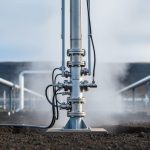
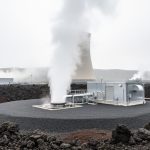
Geothermal energy is generated by extracting heat from Earth’s interior and converting it into electricity through steam turbines or binary-cycle systems. The process begins hundreds to thousands of meters below the surface, where naturally occurring heat reservoirs, heated by radioactive decay and residual formation energy, maintain temperatures ranging from 150°C to over 350°C. Wells drilled into these reservoirs bring hot water or steam to the surface, where power plants harness the thermal energy to drive generators.
This renewable baseload technology operates continuously, unlike solar or wind, making it a critical …

Read More

Why Renewable Energy Journalism Needs Stricter Editorial Standards Than Ever Before

Editorial standards in renewable energy journalism establish the verification, accuracy, and transparency protocols that separate credible industry reporting from promotional content and misinformation. These standards encompass source verification, conflict-of-interest disclosure, technical fact-checking, and balanced representation of technology limitations alongside benefits. In a sector where a single efficiency claim or cost projection can influence multi-million-dollar investment decisions, rigorous editorial guardrails are not optional.
The renewable energy industry presents unique challenges for journalists. Technology …

Read More

Renewable Energy & Sustainability: How U.S. Corporations Are Navigating the Energy Transition

U.S. corporations are fundamentally restructuring their energy portfolios in response to converging regulatory mandates and market pressures. The Securities and Exchange Commission’s climate disclosure framework, fully implemented in 2026, now requires public companies to report Scope 1 and 2 emissions with third-party attestation. California’s climate accountability laws extend these requirements to private companies exceeding $500 million in annual revenue, creating compliance obligations for thousands of businesses previously exempt from federal reporting.
This regulatory environment has transformed renewable energy …

Read More

US Solar News That Actually Matters to Your Business Right Now

The US solar industry stands at a critical inflection point in 2024, with installations expected to surge past 40 gigawatts despite persistent headwinds from supply chain constraints and policy uncertainty. Federal investment tax credits now extend through 2034 following the Inflation Reduction Act’s passage, while domestic manufacturing incentives have triggered over $15 billion in announced factory investments across photovoltaic cells, modules, and inverter production facilities. Yet this expansion unfolds against a complex backdrop: interconnection queues averaging 3-5 years delay project completeness, tariff fluctuations on …

Read More

How Gas Interests Hindered Chile’s Shift to Renewable Power

Chile positions itself as a worldwide climate change leader. Solar and wind projects generate about 22 percent of Chile’s electricity, greatly exceeding the global average of 10 percent. In 2008, it was one of the first governments to establish sustainability targets.
Despite the fact that solar panels have grown across the northern and central of the long, thin country, imported fossil fuels have been able to …

Read More

Corporate Sustainability Demands Significant Renewable Energy Investments

As global warming continues to become a worldwide problem, more and more companies and individuals are finding the need to adopt renewable energy. Being part of the RE100 global movement, more than 350 prominent corporations have pledged to use only 100% renewable energy. 
A good number of them have signed the Climate Pledge, which was co-founded by Amazon. These companies have pledged to achieve net-zero carbon …

Read More

Vistra Initiates Texas’ Biggest Energy Storage System Online

Vistra confirmed today that its DeCordova Energy Storage Unit in Granbury, Texas, is now operational online to help with storing and releasing electricity to the grid for later use. The 260 MW electrical energy storage endeavor is the biggest of its sort in the state and the second of seven Vistra’s new carbon projects to come online in Texas.
DeCordova, which was first revealed in September 2020, is one of the new projects that Vistra will put online in Texas over the following years as part of its expanding Vistra Zero assets.

Read More