




Geothermal Energy News Update: What Changed and What to Watch in 2026
Geothermal energy surged into the policy spotlight this year with two major funding initiatives: the U.S. Department of Energy allocated $171.5 million in February 2026 for next-generation field-scale tests, while Colorado’s $12 million Geothermal Energy Grant Program completed its final funding round, marking full deployment of state-level support for the technology. These developments signal a decisive shift in how federal and state governments are accelerating geothermal deployment, moving beyond early-stage research toward commercial-scale validation and regional infrastructure buildout.
The DOE’s February announcement targets field-scale testing for both electricity generation and exploration drilling, addressing the sector’s most persistent challenge: proving reservoir viability at commercial scale before committing capital to full development. This isn’t incremental funding. It represents the largest single federal commitment to geothermal field testing in recent history, designed to characterize and confirm promising prospects that have remained stranded between exploration and production phases.
Colorado’s program closure tells a different story. The state exhausted its entire $12 million allocation across multiple rounds, demonstrating robust demand for geothermal infrastructure development in regions with high heating loads and favorable subsurface conditions. The speed of fund deployment suggests project pipelines are mature and shovel-ready, constrained primarily by capital availability rather than technical feasibility.
For professionals tracking energy transition news these funding moves confirm geothermal’s elevation from niche technology to strategic priority. The federal focus on field-scale validation de-risks private investment, while state program exhaustion reveals untapped project demand across the sector.
What Changed: Major Geothermal Funding and Policy Developments
The first half of 2026 has marked a decisive turning point in geothermal energy policy, with coordinated moves at federal and state levels signaling the technology’s transition from experimental niche to strategic renewable asset. February brought the largest single federal commitment in years: a $171.5 million Department of Energy funding opportunity targeting next-generation field tests and exploration drilling. This announcement arrived as Colorado simultaneously closed out its $12 million Geothermal Energy Grant Program, having fully awarded all anticipated funds to support in-state development projects.
These parallel funding streams reflect a maturing strategy: the DOE investment addresses technology readiness and exploration risk through field-scale demonstration, while state programs like Colorado’s tackle deployment barriers by supporting direct project implementation. The timing suggests intentional coordination between federal innovation support and state-level rollout, creating pathways for proven technologies to move rapidly from lab to grid. This two-tier approach distinguishes 2026 geothermal policy from previous sporadic funding efforts, positioning the sector for sustained expansion rather than isolated pilot projects.
1. U.S. Department of Energy Commits $171.5 Million for Next-Generation Field Tests
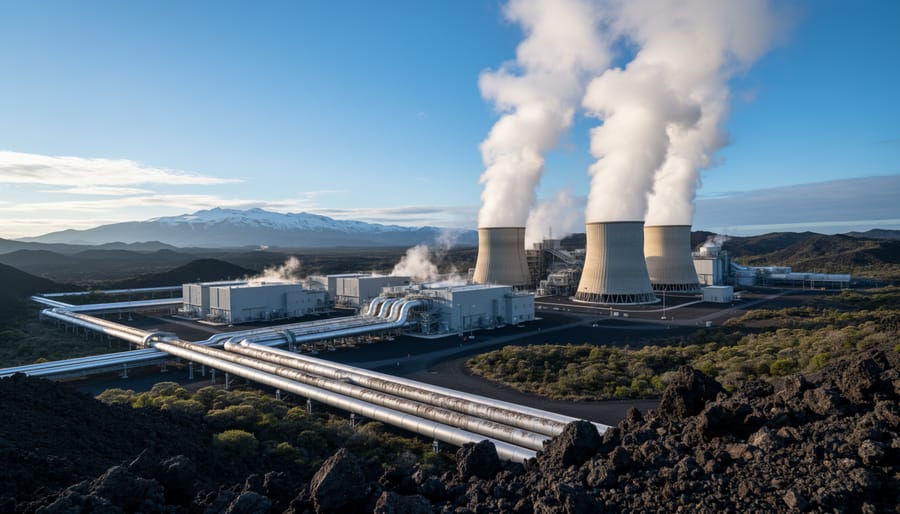
On February 25, 2026, the U.S. Department of Energy issued a substantial funding opportunity announcement totaling $171.5 million, marking the most significant federal commitment to next-generation geothermal technology development in recent years. This funding represents a strategic shift toward field-scale validation of emerging geothermal approaches, moving beyond laboratory research to real-world testing of technologies that could fundamentally change how the industry identifies and develops geothermal resources.
The funding opportunity targets two critical phases of geothermal project development: electricity generation at field scale and exploration drilling initiatives. Unlike conventional geothermal programs that support established technologies at known high-temperature sites, this allocation specifically focuses on advancing methods that can access geothermal resources in previously unviable locations or conditions. Field-scale tests bridge the gap between proven laboratory concepts and commercial deployment, providing the data necessary to attract private investment and reduce technical risk for developers.
The DOE funding covers several interconnected activities designed to accelerate technology maturation:
- Next-generation geothermal technologies including enhanced geothermal systems and closed-loop approaches
- Field-scale testing for electricity generation to validate performance at commercial scale
- Exploration drilling initiatives to prove subsurface conditions and reservoir potential
- Characterization activities using advanced sensing and modeling techniques
- Prospect confirmation to reduce uncertainty for investment decisions
The emphasis on characterization and confirmation addresses one of geothermal development’s most persistent challenges: the high upfront cost and risk of proving a resource before any revenue generation. By supporting detailed subsurface mapping, reservoir modeling, and test drilling at promising sites, this funding helps developers move prospects from theoretical potential to bankable projects. Confirmation activities provide the geological and technical data that lenders and equity investors require, effectively de-risking projects at their most vulnerable stage.
This allocation comes at an inflection point for geothermal technology. Enhanced geothermal systems, which create permeability in hot rock rather than relying on naturally occurring hydrothermal reservoirs, have shown promise in pilot projects but need field-scale validation across different geological settings. Closed-loop systems that circulate fluid through engineered wellbores without fracturing rock represent another frontier requiring real-world testing. The $171.5 million provides the capital necessary to conduct these tests at scales large enough to generate meaningful operational data and demonstrate viability to the broader energy sector.
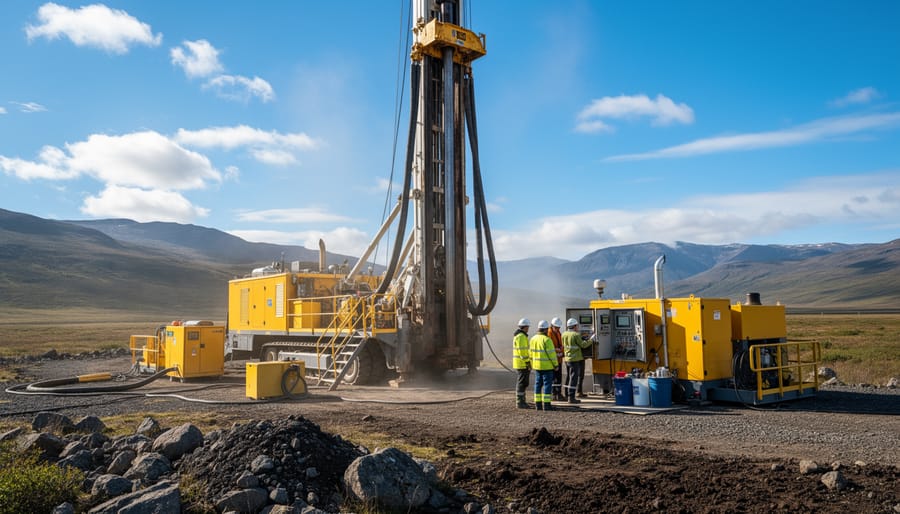
2. Colorado Geothermal Energy Grant Program Fully Awarded
Colorado recently completed its Geothermal Energy Grant Program, marking a significant milestone for state-level renewable energy deployment. The $12 million initiative has now fully awarded all anticipated program funds across its funding rounds, which have all closed as of 2026.
The program was designed to accelerate geothermal development and use within Colorado, addressing the upfront capital barriers that often slow deployment of this baseload renewable resource. Unlike the DOE’s innovation-focused funding, Colorado’s grants targeted practical implementation projects that could demonstrate geothermal’s viability for heating, cooling, and power generation applications across the state’s diverse geographic regions.
Colorado’s geology presents varied geothermal opportunities, from moderate-temperature resources suitable for direct-use heating in population centers along the Front Range to higher-temperature prospects in the Western Slope volcanic zones. The grant program supported projects spanning this spectrum, enabling developers to move promising sites from exploration to operational status without shouldering full financial risk during the critical early stages.
The program’s complete allocation signals both success and a funding gap. Projects that received awards now enter implementation phases, with installations expected to come online over the next 18 to 24 months. These deployments will provide valuable performance data and case studies for Colorado’s geothermal potential, potentially informing future state funding cycles.
For developers who missed this round, the closure creates uncertainty. Colorado has not announced whether additional funding will become available, leaving some viable projects in limbo. This highlights the challenge of state-level renewable energy programs operating in discrete funding cycles rather than continuous support mechanisms.
The timing aligns Colorado’s completed deployment funding with the DOE’s technology advancement initiative, creating a natural progression from state-proven projects to federally-supported next-generation field tests. Developers with Colorado program experience may be well-positioned to compete for DOE awards, bringing operational data from state-funded installations to inform larger-scale federal demonstrations.
3. Growing State and Federal Alignment on Geothermal Deployment
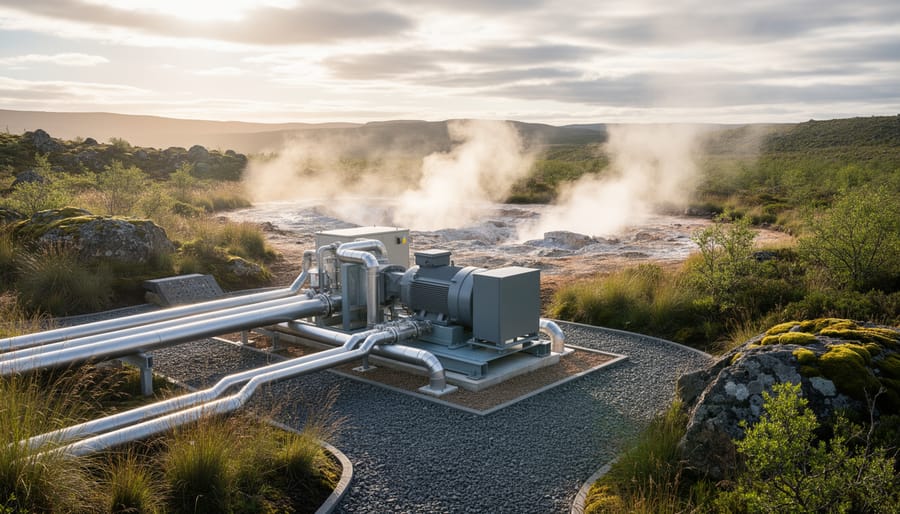
The pairing of DOE’s $171.5 million federal commitment with Colorado’s completed $12 million state program reveals a strategic division of labor emerging in geothermal deployment. Federal dollars target the high-risk, high-reward innovation frontier: field-scale technology demonstrations, exploration drilling in unproven areas, and characterization studies that establish whether a prospect can support commercial development. State programs, by contrast, focus on deployment within their borders, funding projects that apply proven or near-commercial technologies to local resources and grid needs.
This two-tier structure addresses geothermal’s historically stubborn barriers more effectively than either approach alone. Federal funding absorbs the exploration risk and technology validation costs that have deterred private capital, generating data and proof points that reduce uncertainty for follow-on investments. State grants then accelerate deployment of validated approaches, creating local demonstration projects and building regional supply chains. The result is a faster path from laboratory concept to grid-connected power plant than sequential funding stages would allow.
For grid planners and renewable energy developers managing the corporate energy transition this coordinated push positions geothermal as a practical complement to solar and wind rather than a distant prospect. Unlike intermittent sources, geothermal provides constant baseload output, reducing battery storage requirements and firming renewable portfolios. The federal focus on next-generation technologies, including enhanced geothermal systems that expand viable resource areas beyond traditional volcanic zones, promises to make this baseload capacity available in regions previously unable to tap conventional hydrothermal resources. Colorado’s fully deployed program demonstrates that state-level support can move projects from concept to operation while federal research continues.
Why It Matters: Geothermal’s Role in the Energy Transition
The confluence of federal innovation funding and state deployment programs represents a pivotal moment for geothermal energy’s integration into the American grid. These investments target the technology’s fundamental challenge: converting geothermal’s theoretical advantages into economically viable, scalable projects that can compete with established renewable sources.
Geothermal’s strategic value lies in its capacity to deliver continuous electricity regardless of weather conditions or time of day. While solar and wind have achieved dramatic cost reductions and deployment scale, their intermittency creates grid management challenges that require either substantial battery storage or complementary baseload generation. Geothermal fills this gap as a renewable baseload resource that can run at consistent output levels 24 hours a day, providing the grid stability historically supplied by fossil fuel plants.
The February 2026 DOE funding directly confronts geothermal’s historical deployment barriers. High upfront exploration costs and geological uncertainty have deterred private investment, as companies face substantial expenses before confirming whether a prospect will produce commercially viable heat or steam. By funding field-scale tests and exploration drilling, the $171.5 million program reduces financial risk for next-generation technologies that promise lower drilling costs and broader geographic applicability than conventional hydrothermal systems.
Colorado’s $12 million program demonstrates how state-level initiatives translate federal innovation into regional deployment. While DOE funding advances technology readiness, state programs create demand signals and implementation pathways that help nascent projects reach commercial operation. This coordinated approach addresses both sides of the commercialization challenge: proving the technology works and building the market infrastructure to deploy it at scale.
What to Watch: Next Steps and Industry Outlook
The DOE’s $171.5 million funding opportunity follows a structured application and selection process, with review timelines extending into late 2026 for award announcements. Prospective applicants should monitor DOE Office of Energy Efficiency and Renewable Energy updates for concept paper deadlines and full application requirements. Projects selected under this round will launch field demonstrations in 2027, providing critical performance data on next-generation technologies including enhanced geothermal systems and closed-loop approaches.
Colorado’s completed grant program enters its implementation phase, with awarded projects beginning site development and drilling operations. These deployments will offer early proof points for direct-use applications and small-scale generation projects, particularly in regions with moderate-temperature resources. Success metrics from these installations, including capacity factors, installation costs, and operational reliability, will inform whether other western states pursue similar grant structures.
Several developments merit close attention over the coming months:
- Federal funding recipients and selected project locations, which will indicate geographic priorities and technology approaches
- Colorado project implementation milestones, especially first power generation dates and actual versus projected costs
- Next-generation technology field test results from DOE-funded demonstrations, particularly enhanced geothermal system productivity data
- Additional state program announcements from Nevada, Utah, and Oregon, where geothermal resource assessments are underway
- Industry investment trends, including private capital flowing to geothermal developers and drilling service providers
Beyond specific program milestones, watch for broader indicators of deployment acceleration: utility power purchase agreements with geothermal developers, corporate renewable energy buyers adding baseload requirements to procurement criteria, and grid operators incorporating geothermal capacity into long-term resource adequacy plans. For professionals evaluating what is geothermal energy’s role in their portfolios, these market signals will reveal whether 2026 funding translates into sustained commercial activity. Technology demonstrations launching in 2027 will be particularly telling, they represent the first large-scale tests of innovations developed over the past decade, and their performance will shape investor confidence and subsequent deployment rates.
Frequently Asked Questions
The recent surge in geothermal funding raises practical questions for industry participants, investors, and energy professionals seeking to understand program specifics and broader strategic implications. The following addresses the most common inquiries about these 2026 developments and their context within renewable energy policy.
What is next-generation geothermal technology?
Next-generation geothermal refers to advanced techniques including enhanced geothermal systems (EGS), closed-loop systems, and advanced drilling methods that can access geothermal resources beyond traditional hydrothermal reservoirs. These technologies expand the geographic potential for geothermal energy and reduce exploration risk through improved resource characterization.
Who is eligible for the DOE’s $171.5 million funding opportunity?
The February 25, 2026 funding opportunity supports field-scale tests for electricity generation and exploration drilling, targeting organizations capable of conducting characterization and potential confirmation of promising geothermal prospects. Eligible applicants typically include energy developers, research institutions, utilities, and technology companies with demonstrated technical capacity for geothermal project execution.
Why did Colorado’s Geothermal Energy Grant Program close?
Colorado’s program closed because all anticipated funding rounds have concluded and the full $12 million in program funds has been fully awarded. This represents successful deployment of allocated state resources rather than program cancellation.
How do geothermal field-scale tests differ from pilot projects?
Field-scale tests evaluate geothermal technologies at operational scale in real geological conditions, providing data on commercial viability, technical performance, and economic feasibility. These tests bridge the gap between laboratory research and full commercial deployment, addressing technology readiness barriers that slow industry adoption.
Understanding these program details matters because geothermal funding mechanisms differ substantially from solar and wind support structures. Solar and wind programs often emphasize deployment scale and cost reduction for mature technologies, while geothermal initiatives focus on technology advancement and exploration risk mitigation. The DOE’s emphasis on characterization and confirmation reflects the sector’s primary challenge: high upfront costs and geological uncertainty that traditional project finance struggles to accommodate.
The Colorado program’s completion illustrates another distinction. State-level geothermal programs typically operate as time-limited grant cycles rather than ongoing incentives, reflecting both budget constraints and the nascent stage of geothermal deployment in most states. This contrasts with established solar tax credits and renewable energy certificates that provide continuous market support.
For energy professionals evaluating geothermal’s place in renewable portfolios, these funding structures signal policy recognition of geothermal as a baseload complement to variable renewables rather than a direct competitor. The technology addresses grid stability and capacity factor requirements that intermittent sources cannot meet alone, justifying distinct support mechanisms focused on demonstration and validation rather than deployment scaling. Industry coverage of these nuances requires attention to editorial standards that distinguish between funding for technology development versus operational deployment, as conflating these categories obscures the strategic rationale behind program design.
The $171.5 million DOE commitment and Colorado’s completed $12 million grant program mark more than incremental progress, they signal geothermal’s arrival as a serious contender in the renewable energy mix. Federal investment in next-generation field tests addresses the technology’s most persistent barriers: exploration risk and the capital intensity of proving reserves. State programs like Colorado’s demonstrate that geothermal can move from concept to deployment when policy creates a clear path forward.
These initiatives matter because grid reliability demands baseload renewable sources that operate when solar panels go dark and wind turbines sit idle. Geothermal delivers continuous power without the intermittency challenges that complicate renewable integration. As project demonstrations emerge from DOE-funded field tests and Colorado’s awarded programs reach operational status, the industry will gain critical performance data and cost benchmarks that shape future deployment.
For professionals in the renewable sector, the message is straightforward: watch the project announcements closely. The demonstrations launching in 2026 will determine whether geothermal scales to compete with established renewables or remains a niche contributor. Either outcome reshapes how we build resilient, decarbonized grids.
